SPARKLING WINE
•
France
Champagne
The world's most celebrated sparkling wine, embodying luxury, celebration, and centuries of French winemaking heritage.
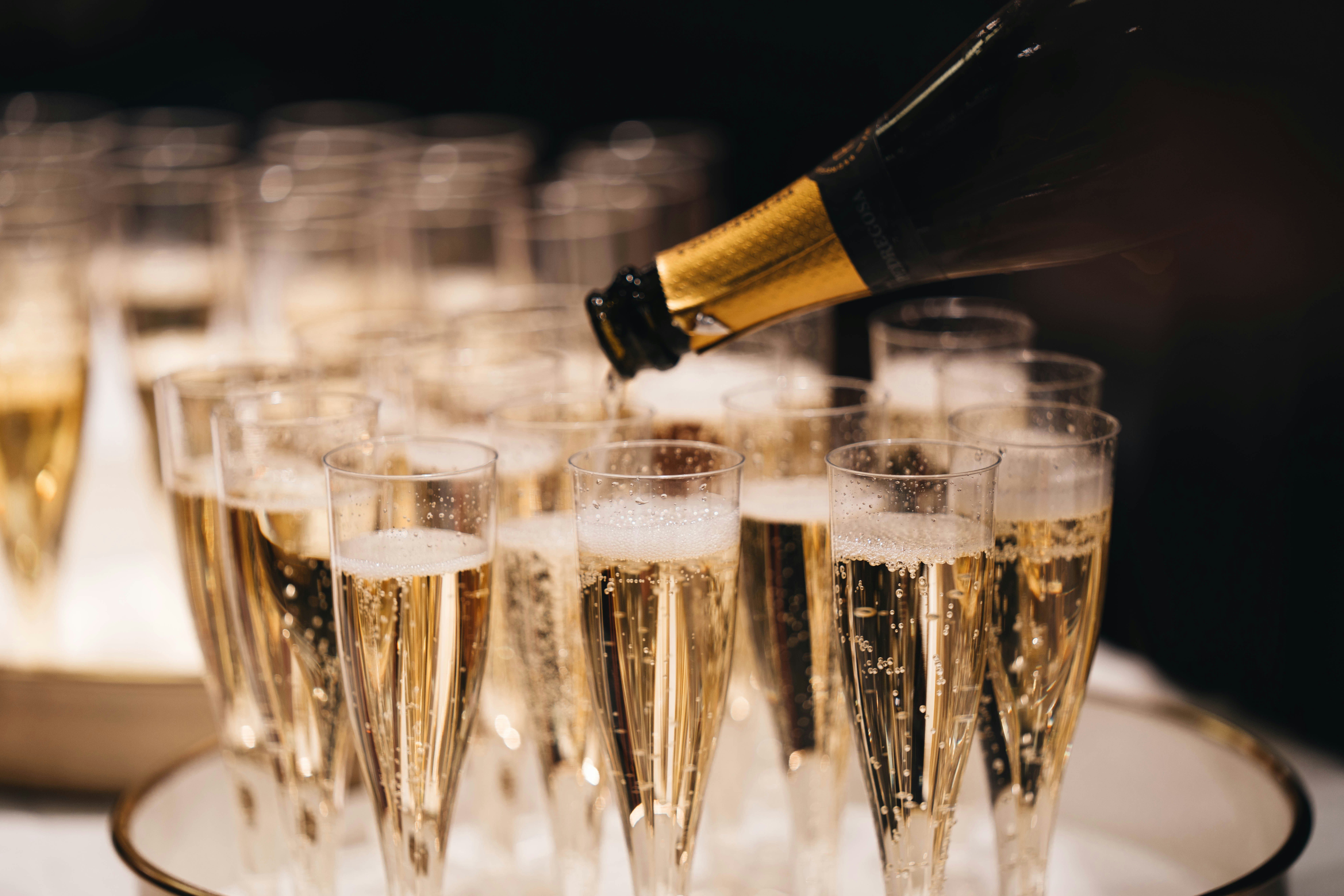
The world's most celebrated sparkling wine, embodying luxury, celebration, and centuries of French winemaking heritage.
Champagne's story begins in the Champagne region of northeastern France, where the cool climate and chalk-rich soil create ideal conditions for producing exceptional sparkling wines. The history of Champagne is deeply intertwined with a fortuitous accident that revolutionized winemaking during the 17th century.
In the early 1600s, winemakers in Champagne initially viewed the natural fermentation that created bubbles as a defect. However, a Benedictine monk named Dom Pérignon, who served as the cellarmaster of Hautvillers Abbey, recognized the potential of this "accident" and began developing techniques to intentionally produce and control carbonation. His innovations in blending, bottle strength, and cork technology transformed sparkling wine production forever.
By the late 18th century, Champagne had become associated with celebration and luxury among European nobility. The French Revolution and subsequent Napoleonic Wars initially threatened production, but the region's reputation continued to strengthen throughout the 19th century. The Industrial Revolution brought advancements in bottle production and mechanization, making Champagne more accessible while maintaining its prestige.
Today, Champagne holds protected designation of origin (AOC) status, meaning only sparkling wines produced in the Champagne region following strict regulations can legally bear the name. This protection ensures consistency and quality, making Champagne the gold standard for sparkling wines worldwide. The region has weathered numerous challenges, from phylloxera in the 19th century to world wars and economic crises, yet it continues to thrive as a symbol of elegance and refinement.
White wine is produced from a blend of Chardonnay, Pinot Noir, and Pinot Meunier grapes. The base wine undergoes primary fermentation in stainless steel or oak vessels, developing the foundational flavors and alcohol content (typically 10-11%).
Different base wines from various vineyards and vintages are carefully blended to create the desired flavor profile. This is where the winemaker's expertise truly shines, as blending determines the house's signature style and consistency year after year.
A mixture of sugar and yeast (liqueur de tirage) is added to the blended wine, and bottles are sealed with crown caps. This induces a second fermentation within the bottle, creating the characteristic carbonation and trapping the CO2 inside.
Bottles are aged in underground chalk cellars for a minimum of 15 months for non-vintage Champagne and 3 years for vintage bottles. During this time, the dead yeast cells (lees) impart rich, complex flavors including brioche, toast, and nuts. The chalk cellars maintain perfect temperature and humidity conditions for this critical aging period.
Bottles are placed neck-down in riddling racks and gradually turned and tilted to move the sediment toward the neck. This process takes 6-8 weeks and was traditionally done by hand, though many houses now use mechanical riddling machines called gyropalettes.
The bottle neck is frozen in a brine solution, and the cap is removed, ejecting the frozen plug of sediment. This technique, developed in the 19th century, eliminates the yeast without losing the precious bubbles.
After disgorging, a small amount of sugar syrup (liqueur d'expédition) is added to top up the bottle and determine the final sweetness level. The bottle is then corked with a champagne cork and cage, ready for release.
Appearance: Look at the wine in natural light. Quality Champagne displays a pale golden or straw color, with a persistent stream of fine bubbles rising from the bottom of the glass. The bubbles should be tiny and steady, not large and fleeting. A proper mousse (foam head) should form and persist for several minutes.
Aroma: Bring the glass to your nose and identify the aromas. Quality Champagne typically presents complex scents including apple, lemon, toast, brioche, almond, and hazelnut. Vintage Champagnes often develop additional complexity with notes of honey, dried fruit, and minerality after extended aging.
Flavor: Take a small sip and let it coat your mouth. Pay attention to the initial taste, which should be crisp and refreshing. Notice how the flavors develop and evolve as the wine warms in your mouth. Quality Champagne displays remarkable balance between acidity, fruit, and complexity.
Finish: After swallowing, notice the aftertaste. Excellent Champagne leaves a long, persistent finish with flavors that linger for 30 seconds or more. The finish should be clean and elegant, never harsh or bitter.
Temperature: Serve Champagne at 45-50°F (7-10°C). Use a champagne flute or tulip glass to preserve bubbles and concentrate aromas. Never use a coupe glass, as it allows carbonation to escape too quickly.
Champagne's versatility and crisp acidity make it an exceptional pairing partner for a wide range of foods. Here are expertly curated recommendations:
Producer Reputation: Research the producer's history and awards. Renowned houses like Dom Pérignon, Veuve Clicquot, Moët & Chandon, and Krug have established excellence over centuries. However, smaller growers also produce exceptional Champagne at more accessible prices.
Vintage Considerations: For special occasions, consider vintage Champagne from excellent years. Recent excellent vintages include 2012, 2014, 2015, and 2017. Non-vintage Champagne offers consistency and is perfect for casual celebrations.
Price Range: Entry-level quality Champagne starts around $30-40, mid-range bottles cost $50-100, and prestigious bottles command $200+. Budget does matter, but excellent Champagne can be found at various price points when you know what to look for.
Label Information: Check for AOC Champagne designation. Look at the disgorgement date on the label - fresher bottles offer crisper flavors, while older disgorgements provide more complexity. The producer type is also important: Négociant-Manipulant (NM) houses are large producers, while Grower Champagne (RM) comes directly from vineyard owners.