A centuries-old fermented tea from ancient China, celebrated for its probiotic properties, diverse flavors, and wellness benefits in contemporary health culture.
Kombucha's origins trace back approximately 2,000 years to ancient China, where the fermented tea was valued for its purported health benefits and served in royal courts. Historical records suggest kombucha originated in Northeast China or Mongolia, though exact origins remain debated among historians. The name "kombucha" itself represents a linguistic evolution—the English term derives from Japanese terminology rather than original Chinese names, reflecting the beverage's circuitous global journey.
From China, kombucha spread along ancient trade routes, eventually reaching Japan and Russia. In Japan, kombucha became incorporated into traditional wellness practices and remained relatively obscure in Western culture until the 20th century. Russian adoption of kombucha coincided with cultural emphasis on fermented foods, though even there it remained primarily a household remedy rather than commercial product.
Kombucha's introduction to Western Europe and North America occurred gradually, initially promoted through alternative health communities and wellness advocates. Throughout the 1980s and 1990s, kombucha remained primarily a DIY household fermentation project, with passionate enthusiasts maintaining and sharing SCOBY (Symbiotic Culture of Bacteria and Yeast) cultures among friends and family. The commercial kombucha industry remained virtually nonexistent until the 1990s.
The explosion of commercial kombucha production began in earnest during the 2000s as Western consumers increasingly embraced fermented foods and probiotic beverages for health reasons. Companies like Remedy, GT's Living Foods, and KeVita pioneered the commercial kombucha market, establishing distribution in natural food stores and eventually mainstream supermarkets. Today, kombucha represents one of the fastest-growing beverage categories globally, with market projections suggesting continued expansion.
The modern kombucha renaissance reflects broader cultural shifts toward functional beverages, natural fermentation, and wellness-focused consumption. While kombucha's ancient heritage provides cultural legitimacy, contemporary interest stems equally from scientific exploration of fermentation science and probiotics, making kombucha both a traditional remedy and a modern wellness beverage at the intersection of history and contemporary nutritional science.
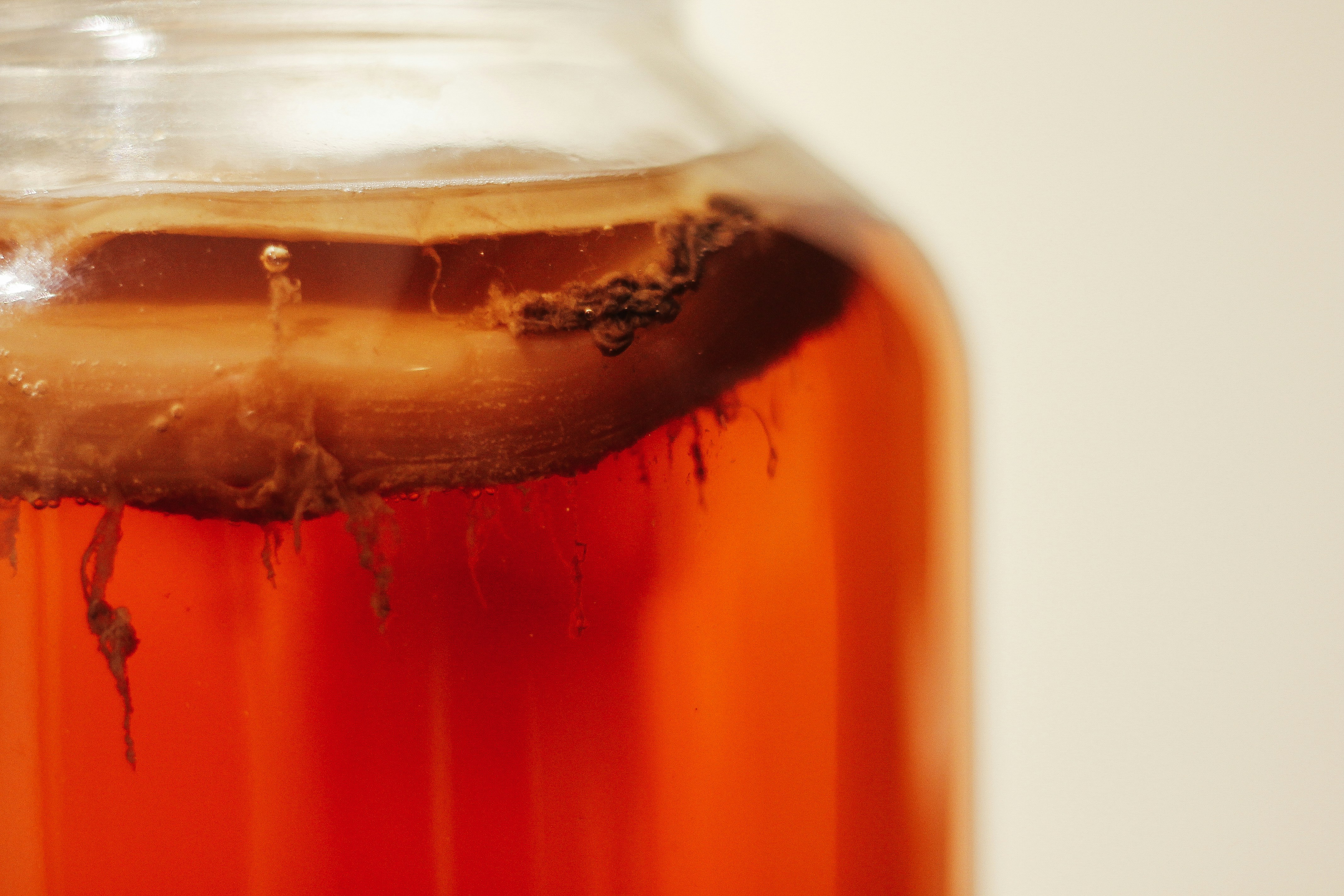
Kombucha fermentation represents a complex symbiotic process involving multiple microorganisms collaborating to transform sweet tea into a living, health-promoting beverage.
SCOBY stands for Symbiotic Culture of Bacteria and Yeast—the living culture that initiates and sustains kombucha fermentation. This mysterious-looking cellulose mat floating on top of brewing kombucha represents a collaborative biofilm of beneficial bacteria and yeast strains working in concert. The most prominent bacteria include Acetobacter species (responsible for acetic acid production) and Gluconobacter species, while yeast strains like Saccharomyces cerevisiae and Schizosaccharomyces pombe drive fermentation processes. These microorganisms exist in a delicate ecological balance where each organism's metabolic byproducts support other organisms' growth.
Initial Stage: Upon contact with sweet tea, yeast in the SCOBY begins converting glucose into ethanol and CO2, creating mild carbonation and a slight alcoholic content (typically 0.5-2%). Simultaneously, the yeast converts various carbohydrates into acids and other compounds.
Bacterial Colonization: As yeast fermentation produces ethanol and acidifies the environment, acetic acid bacteria (particularly Acetobacter) colonize the solution. These bacteria convert ethanol and various sugars into acetic acid, lactic acid, and other organic acids, further lowering pH and creating the characteristic tangy flavor.
Successive Fermentation: The fermentation progresses through successive stages of activity by different microorganisms, each creating conditions favorable for the next stage. This elegant ecological succession creates the complex flavor profile and bioactive compounds characteristic of properly fermented kombucha.
The fermentation process creates numerous bioactive compounds including organic acids (acetic, gluconic, lactic), B vitamins, amino acids, and polyphenols. Each fermentation produces a unique combination depending on environmental conditions, tea origin, fermentation duration, and the specific SCOBY culture composition. The SCOBY itself develops into an increasingly organized cellulose mat with each fermentation cycle, strengthening its structure and making it more effective for subsequent batches.
Kombucha's flavor complexity derives from multiple sources: the original tea, fermentation duration, SCOBY composition, and flavor additions during secondary fermentation.
Black Tea Kombucha: Traditional base offering robust, malty undertones with pronounced acidity. Black tea's tannins and depth pair excellently with the fermented tang, creating complex, full-bodied flavor.
Green Tea Kombucha: Lighter, more delicate profile with grassy undertones complementing the acidity. Creates a more refreshing beverage with subtle complexity.
Oolong and Herbal Bases: Adventurous brewers experiment with diverse tea bases—oolong creates balanced profiles between black and green, while herbal bases like chamomile or rooibos introduce entirely different flavor dimensions.
After primary fermentation, many kombucha producers add fruit juices, ginger, herbs, or spices during secondary fermentation, creating virtually endless flavor combinations. Ginger-flavored kombucha provides warming spice, berry variations introduce subtle sweetness and antioxidants, citrus additions create bright refreshment, and herbal infusions (mint, basil) provide aromatic complexity.
Kombucha enthusiasts credit the beverage with numerous health benefits, though rigorous scientific validation remains ongoing for many claims. Evidence supports several specific benefits:
Probiotic Content: Kombucha contains live bacteria and yeast cultures that may support digestive health when consumed in adequate quantities. These probiotics can colonize the gut microbiota, potentially improving digestion and immune function. The specific bacterial strains present vary by SCOBY and fermentation conditions.
Antioxidant Properties: Kombucha retains antioxidants from the original tea base, supplemented by additional antioxidant compounds created during fermentation. These antioxidants combat free radicals and oxidative stress, potentially reducing disease risk.
Digestive Support: The organic acids produced during fermentation (acetic acid, gluconic acid) may support digestive enzyme production and healthy stomach acid levels. Many traditional medicine systems credit kombucha with digestive benefits supported anecdotally though not universally proven scientifically.
Liver Support: Some evidence suggests kombucha may support liver detoxification processes, though research remains preliminary. The glucaric acid found in kombucha may enhance the liver's Phase II detoxification pathway.
Joint Health: Kombucha contains glucosamine, a compound supportive of joint cartilage and connective tissue. This may explain traditional uses for joint health, though research continues.
Home kombucha brewing represents an accessible way to produce this living beverage while maintaining complete control over ingredients and fermentation processes.
• A glass jar (typically 1-quart minimum for beginner batches)
• Coffee filters or breathable cloth for covering the jar during fermentation
• A healthy SCOBY (obtainable from friends, online sources, or by cultivating one)
• Bottles for storing finished kombucha
1. Prepare Sweet Tea: Brew strong tea (black or green) with approximately 1 tea bag or 1 teaspoon loose tea per cup of water. While hot, add 1/4 cup sugar per liter of brewed tea. Allow to cool completely to room temperature before proceeding.
2. Introduce SCOBY: Place the cooled sweet tea in your glass jar. Gently add your SCOBY and 1-2 cups of starter liquid (previously fermented kombucha or liquid from your SCOBY). The SCOBY may sink or float—both are normal and acceptable.
3. Cover and Ferment: Cover the jar with coffee filters or breathable cloth, securing with a rubber band. This allows gas exchange while preventing contamination from dust or insects. Place in a warm location (68-85°F ideally) away from direct sunlight.
4. Fermentation Timeline: Fermentation typically requires 7-30 days depending on temperature, starting SCOBY strength, and desired flavor intensity. Warmer temperatures accelerate fermentation. Taste periodically (using a clean straw) to determine completion—the kombucha should taste acidic with slight residual sweetness.
5. Bottle and Secondary Ferment: Once primary fermentation reaches desired tartness, strain kombucha into bottles. This is the ideal time to add flavor—fruit juice, fresh ginger, herbs, or spices can be added now. Seal bottles loosely initially to allow pressure to build.
6. Secondary Carbonation: Allow sealed bottles to sit at room temperature for 2-7 days to develop carbonation. Taste and refrigerate when desired carbonation develops. The longer you wait, the more carbonated and less sweet your kombucha becomes.
7. Prepare for Next Batch: Remove the SCOBY and reserved starter liquid for your next fermentation cycle. Properly maintained SCOBYs can last indefinitely through repeated fermentation cycles.
Mold Growth: White, green, or black fuzzy growths indicate contamination. Discard the batch and thoroughly clean your equipment. Prevention involves maintaining cleanliness and avoiding exposure to contaminants.
No SCOBY Formation: A new SCOBY forms during fermentation—don't worry if it's thinner or less developed initially. Each fermentation strengthens the culture.
Appearance: Quality kombucha ranges from clear to slightly cloudy, reflecting the presence of beneficial bacteria and yeast. Cloudiness indicates living cultures—actually a positive sign of an active product. Color depends on tea choice and added ingredients.
Aroma: Pleasant kombucha carries slightly vinegary, slightly sweet aromatics. The smell should be inviting and suggest both tea and fermentation character.
Taste Progression: Initial taste should be tangy from acetic acid, with underlying tea character and any added flavors. As kombucha warms slightly in your mouth, additional complexity emerges. The finish should be refreshing and slightly tart, never harsh or off-putting.
Carbonation Level: Quality kombucha typically displays moderate carbonation (not flat, but not aggressively fizzy like soda). Proper secondary fermentation develops appealing carbonation.